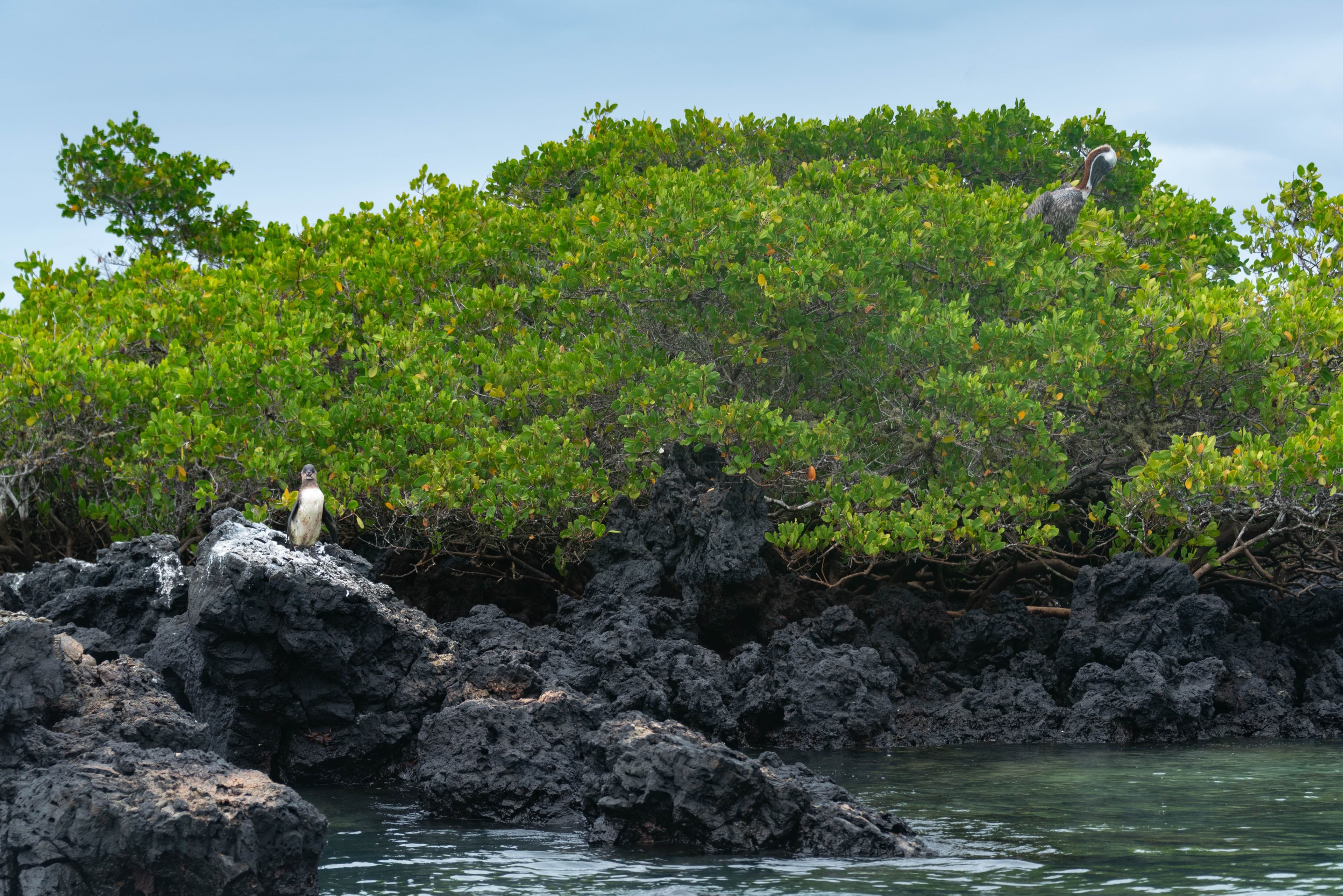
The Galápagos Islands are not just a travel destination; they are a living testament to evolution. Situated 1,000 kilometers off the coast of Ecuador, this volcanic archipelago is home to species found nowhere else on earth—species that famously lack a natural fear of humans.
However, the islands are under immense pressure from climate change, illegal fishing, and over-tourism. To visit the Galápagos as an eco-tourist means making deliberate choices about how you travel, where your money goes, and how you interact with the wildlife.
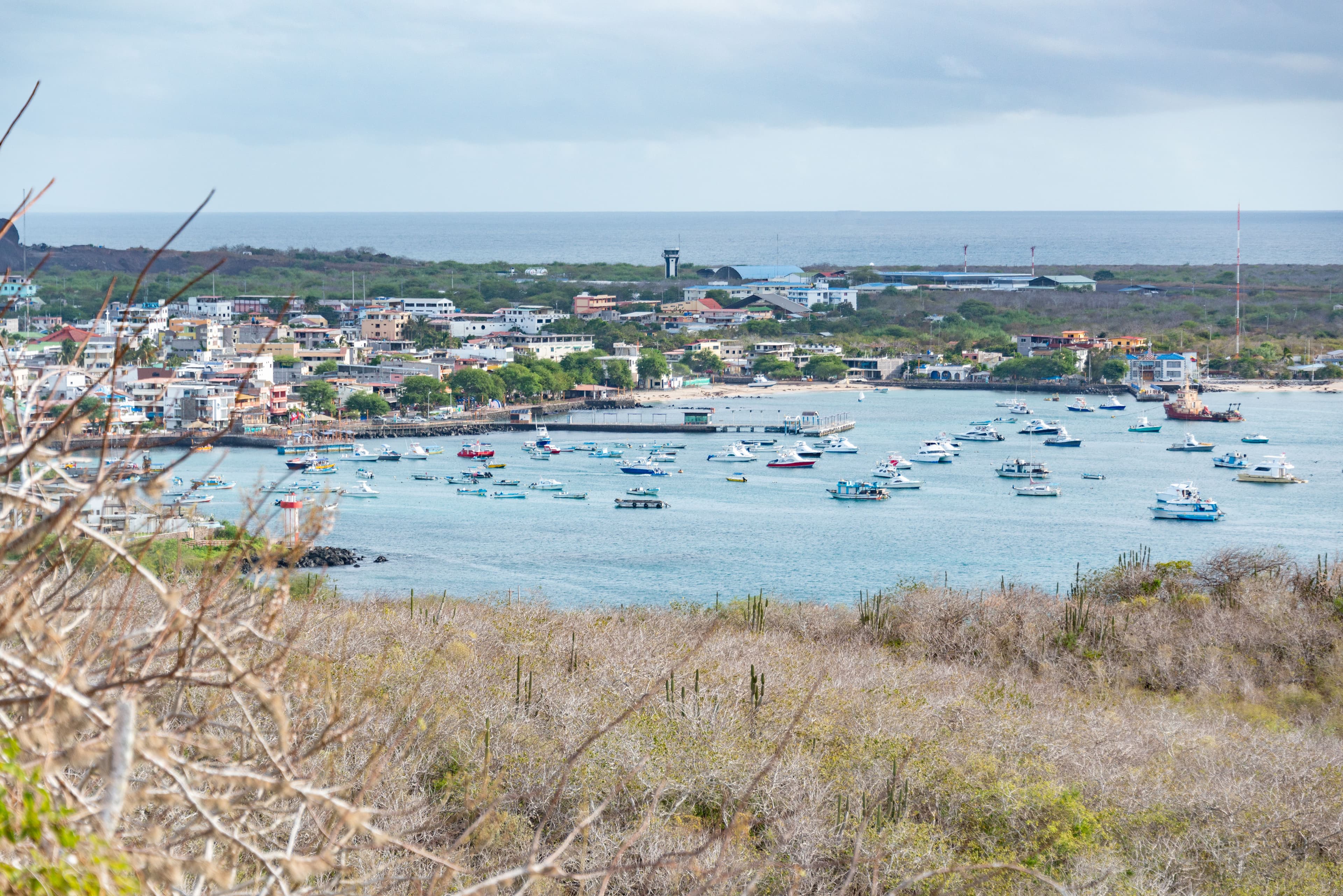
1. Santa Cruz Island & Puerto Ayora
Puerto Ayora on Santa Cruz Island is the main tourism hub of the archipelago. Most land-based trips and liveaboard cruises launch from here.
Start your education at the Charles Darwin Research Station. Here, you can learn about the massive international effort to breed and repatriate giant tortoises to their native islands, saving several species from the brink of extinction. In the afternoon, hire a taxi to take you to the highlands (specifically the El Chato Tortoise Reserve) where you can walk through the misty scalesia forests and see these ancient giants roaming freely in the wild.
From Baltra Airport (GPS), take the mandatory bus to the Itabaca Channel, cross via a short ferry, and take a 45-minute taxi into Puerto Ayora.
Choose a locally-owned eco-hotel in Puerto Ayora that explicitly outlines its water conservation and recycling practices.
2. Isabela Island (Los Túneles)
To avoid the massive footprint of a cruise ship, many travelers now opt for "land-based" island hopping. From Santa Cruz, take a 2-hour public speedboat to Isabela Island, the largest and most volcanically active island in the chain.
Isabela is sleepier, with sandy, unpaved streets in its main town, Puerto Villamil. Book a small-group snorkeling tour to Los Túneles. Here, volcanic lava flows collapsed into the ocean, creating a labyrinth of arches and clear pools. Snorkeling here means swimming alongside white-tip reef sharks, massive sea turtles, and the world's only marine iguanas foraging for algae underwater.
Los Túneles is strictly regulated. You must book an authorized small-boat tour out of Puerto Villamil; no private access is allowed.
Stay at a small, family-run guesthouse in Puerto Villamil to support the local economy.
3. San Cristóbal Island (La Lobería & Kicker Rock)
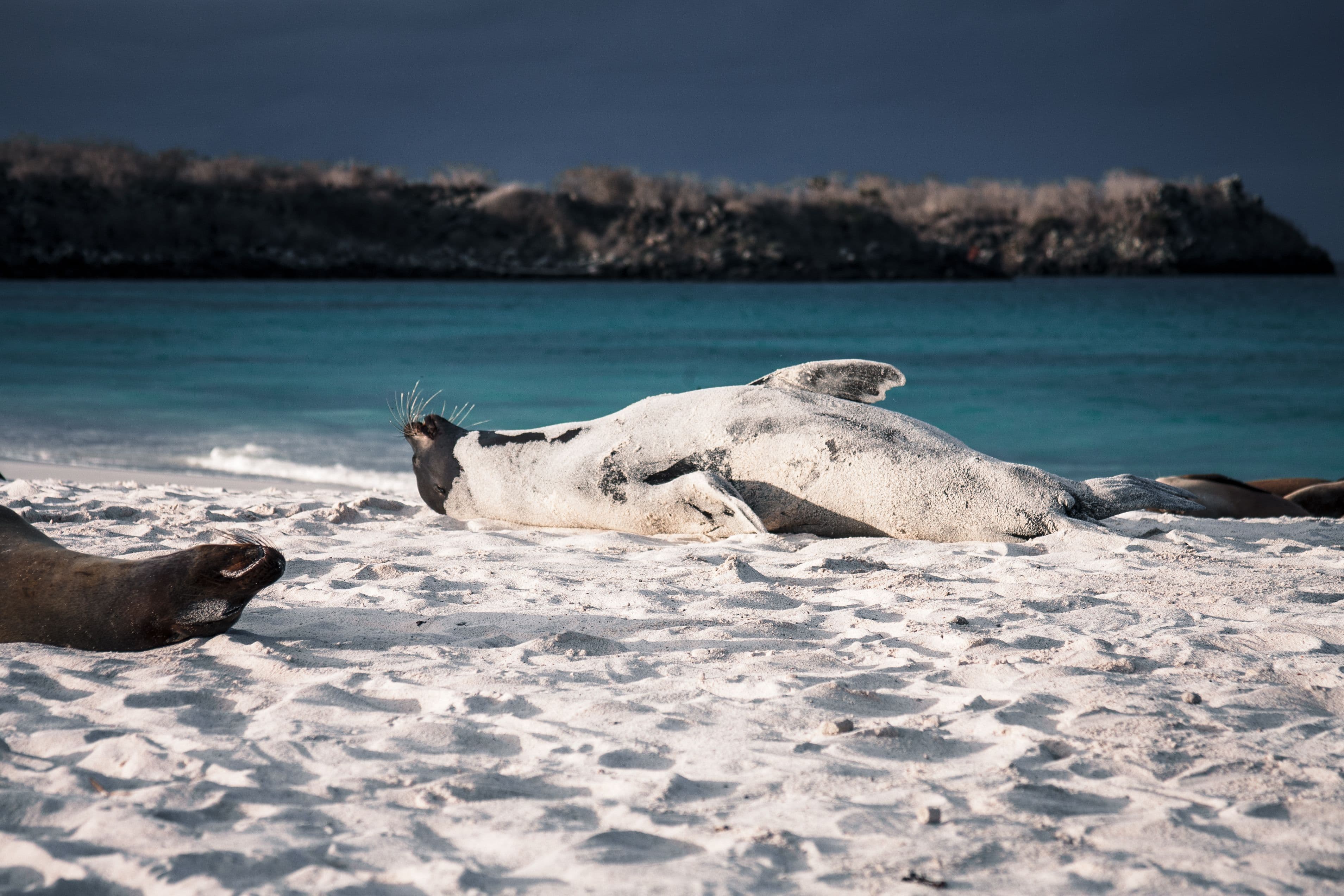
Located on the eastern edge of the archipelago, San Cristóbal Island is the administrative capital and home to a wealth of marine biodiversity. Its beaches are famously populated by thousands of noisy, resting sea lions that snooze directly alongside human residents on the town boardwalk.
Take a boat excursion to Kicker Rock (León Dormido), a towering, 140-meter volcanic obelisk rising out of the deep ocean. Snorkel through the narrow, vertical channel to swim alongside eagle rays, green sea turtles, and docile Galapagos sharks. Back on land, hike to La Lobería, a beautiful crescent beach where you can observe sea lions surfing the waves and marine iguanas sunning on the black lava rocks.
The Kicker Rock excursion is accessible only via registered boat tours. The boat ride from Puerto Baquerizo Moreno takes 45 minutes; open ocean currents can be strong.
Stay in a waterfront boutique hotel in Puerto Baquerizo Moreno for stunning sunsets and close proximity to wildlife.
4. Española Island (Gardner Bay & Suarez Point)
Located on the far southern tip of the archipelago, Española Island is one of the oldest and most remote islands in the Galapagos. Completely uninhabited by humans, it is a highly pristine ecological sanctuary famous for its high rates of endemic wildlife.
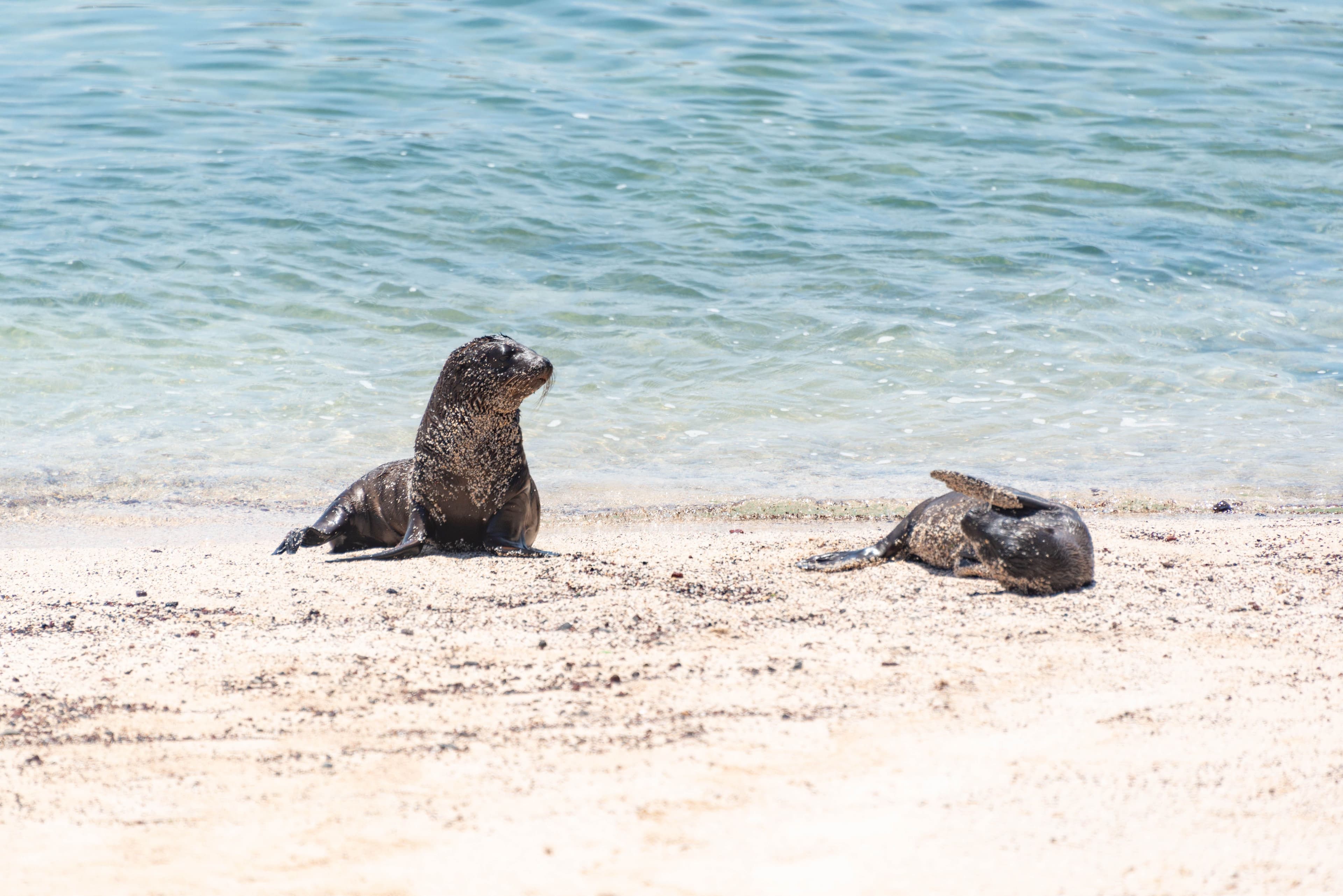
Embark on the rocky trail at Suarez Point (Punta Suárez) to walk directly through nesting colonies of blue-footed boobies, Nazca boobies, and the spectacular, massive Waved Albatross (which nests almost exclusively here). Watch the dramatic marine blowhole shoot water 20 meters into the air. Afterwards, walk the brilliant white coral sands of Gardner Bay, swimming with curious sea lion pups in the turquoise shallows.
Española Island
Coordinates: -1.3780, -89.6890
The Punta Suárez trail is a rugged 2km loop crossing uneven, sharp volcanic rock. Sturdy walking shoes are mandatory; albatross nesting is visible from April to December.
No overnight stays are allowed. Española is accessible only via registered day-trip boats from San Cristóbal or as part of a multi-day liveaboard cruise.
The Rules of Eco-Tourism in the Galápagos
To protect this fragile ecosystem, the Galápagos National Park has strict rules that every visitor must follow:
- Keep Your Distance: You must maintain a minimum distance of 2 meters (6 feet) from all wildlife. If an animal approaches you (which they frequently do), you must back away.
- No Flash Photography: Flash photography can disorient and blind nocturnal and nesting animals. Turn it off completely.
- Pack In, Pack Out: Bring reef-safe sunscreen, a reusable water bottle, and take all non-organic trash back to the mainland with you when you leave.
- Use Authorized Guides: Never wander off marked trails, and only use park-certified naturalist guides for excursions.
By traveling responsibly, paying your park fees, and supporting local Ecuadorian businesses, you help fund the continued protection of Darwin's laboratory.
Looking for flights to the Galápagos and sustainable lodges? Use the GoTripping search wizard to compare your options in one place.