Rome is a living museum where modern life rushes past columns that have stood for millennia. This is the heart of what was once the greatest empire in the Western world, where the echoes of gladiators, emperors, and ancient architects still linger in the stones.
To truly understand Ancient Rome on your trip, you need a balanced itinerary that pairs the colossal monuments with the quieter, less-trafficked ruins. This guide outlines four essential historical zones in the city, providing precise coordinates, transit advice, and neighborhood recommendations.
1. The Colosseum & Palatine Hill
The Flavian Amphitheatre, better known as the Colosseum, is the ultimate symbol of Imperial Rome. Capable of holding up to 80,000 spectators, this massive arena hosted gladiatorial contests, animal hunts, and mock sea battles.
Start your morning early at the Colosseum to beat the crowds, opting for a ticket that includes access to the underground hypogeum. Afterwards, walk over to Palatine Hill, the mythological birthplace of Rome. Stroll through the sprawling ruins of the Imperial Palaces and look down over the Circus Maximus, where chariot races once captivated the masses.
Take Metro Line B to the Colosseo stop. The monument is directly across the street as you exit the station.
Stay in the Monti District for chic boutique hotels and quick walking access to the Colosseum area.
2. The Roman Forum

Located in the valley between the Palatine and Capitoline hills, the Roman Forum was the bustling epicenter of ancient Rome. It was the site of triumphant processions, elections, public speeches, and criminal trials.
Walk the Via Sacra, the main street of ancient Rome. Admire the surviving columns of the Temple of Saturn, the arches of Titus and Septimius Severus, and the circular Temple of Vesta where the Vestal Virgins kept the sacred fire burning. Take your time; the sheer concentration of history here requires a slow pace and a good guidebook to fully appreciate.
The Forum is adjacent to the Colosseum. Your combined ticket grants entry. Use the entrance on Via dei Fori Imperiali.
Stay near Piazza Venezia for central access to the Forum and other major ancient sites.
3. The Pantheon
The Pantheon is the best-preserved building from ancient Rome, and its dome remains the largest unreinforced concrete dome in the world, nearly two thousand years after it was built. Originally a temple to all gods, it now serves as a church and the resting place of Italian kings and the painter Raphael.
Step inside to witness the genius of Roman engineering. The massive oculus at the top of the dome is the only source of natural light, tracing the movement of the sun across the marble interior. When it rains in Rome, the water falls directly through the oculus and drains through invisible holes in the sloped floor.
Located in the pedestrian-friendly Centro Storico (historic center). Best reached on foot from Piazza Navona or the Trevi Fountain.
Stay near the Pantheon area for the ultimate romantic Roman experience right in the middle of it all.
4. Appian Way & Catacombs

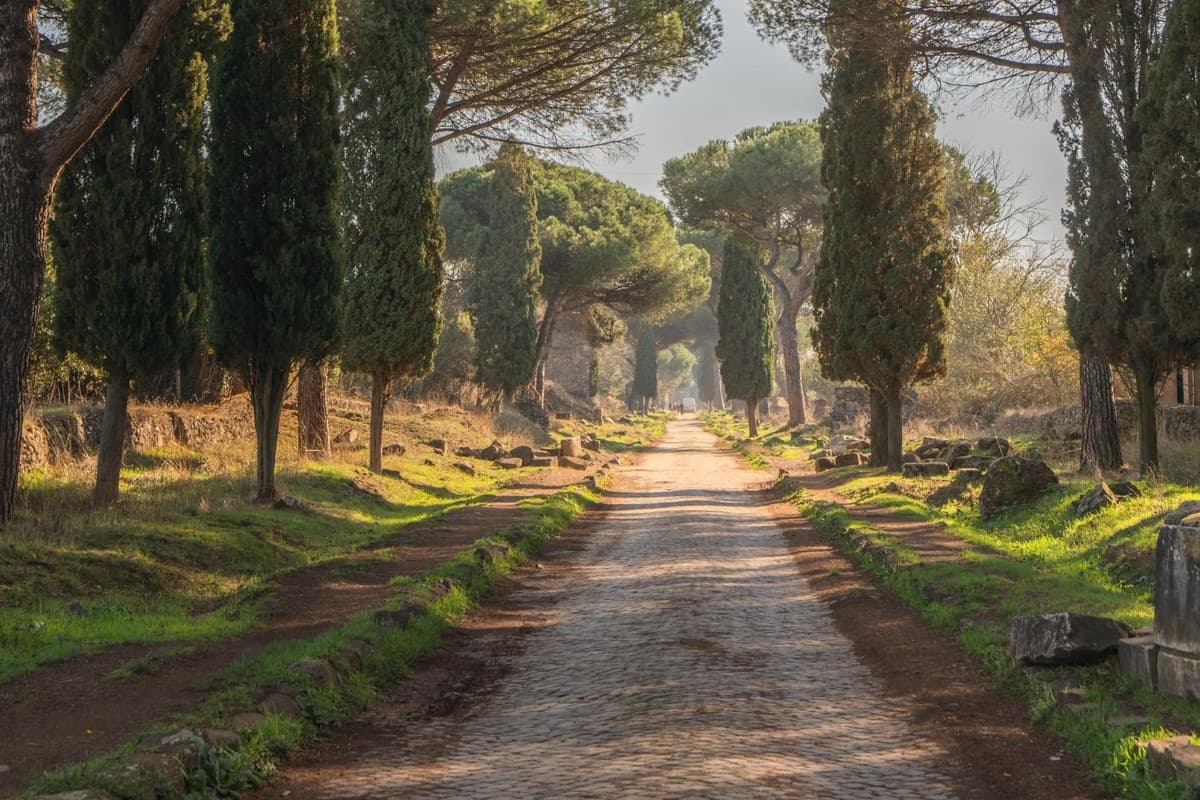
To understand Rome, you must also step outside its ancient walls. The Via Appia Antica (Appian Way) was Rome’s most important military and economic artery, stretching all the way to southern Italy. Today, its large, uneven basalt stones are deeply rutted by ancient chariot wheels.
Rent a bicycle and ride along the cypress-lined road, passing tombs and ruins in the peaceful countryside. Be sure to stop and descend into the Catacombs of San Callisto or San Sebastiano. These vast, multi-level underground burial chambers offer a sobering and fascinating look into early Christian Rome and ancient burial practices.
Take Bus 118 or 218 from the city center down towards the catacombs. On Sundays, the road is closed to most car traffic, making it perfect for cycling.
Stay near the Aventine Hill for a peaceful, upscale neighborhood with easy access to the southern ruins.
Planning Your Roman History Trip
To get the most out of ancient Rome, keep these practical tips in mind:
- Book in Advance: The Colosseum, Forum, and Pantheon now require timed-entry tickets that sell out weeks in advance. Do not rely on showing up and buying tickets on the day.
- Wear Serious Walking Shoes: Rome's cobblestones (sampietrini) and ancient basalt roads are notoriously hard on feet. Leave the sandals and thin-soled shoes in your luggage.
- Stay Hydrated the Ancient Way: Rome is dotted with thousands of "nasoni"—cast iron public fountains pumping free, ice-cold, pure aqueduct water. Bring a reusable bottle.
Rome is a city built in layers. Take your time, allow yourself to get slightly lost in the winding alleys, and enjoy tracing the footsteps of an empire.
Looking for flights, hotels, and routes across Rome? Use the GoTripping search wizard to compare your options in one place.